
Walking is one of the simplest and most effective ways to combat the
stress of fast-paced city life. The noise, traffic, and crowds can feel
overwhelming, leaving little room to breathe. But by creating well-designed
urban walking paths, we can encourage physical activity and provide a
much-needed sense of balance, relaxation, and mental clarity.
Why Walking Matters for Mental Peace
Walking is more than just a way to move your body; it's a powerful tool
for your mental health. Just 20 to 30 minutes of walking can significantly
reduce stress, boost your mood, help you focus, and enhance serotonin hormone
in body. In busy cities, where mental burnout is a real concern, creating safe
and welcoming places to walk can turn a simple commute or daily errand into a
peaceful and therapeutic break.
The Role of Urban Design in Walking Spaces
Walking feels good, but whether we choose to do it often depends on how
our cities are designed. It's a simple truth: if our streets are loud and
stressful, with cars zipping past and horns blaring, we're not going to want to
stick around. It makes people want to get off the sidewalk as quickly as
possible. But when cities prioritize people over cars, the feeling is
completely different. Wide, tree-lined sidewalks with plenty of greenery and
shade feel welcoming and safe, encouraging people to step outside and enjoy a
stroll. In short, the way we plan our urban spaces can either invite or deter
us from the simple pleasure of walking.
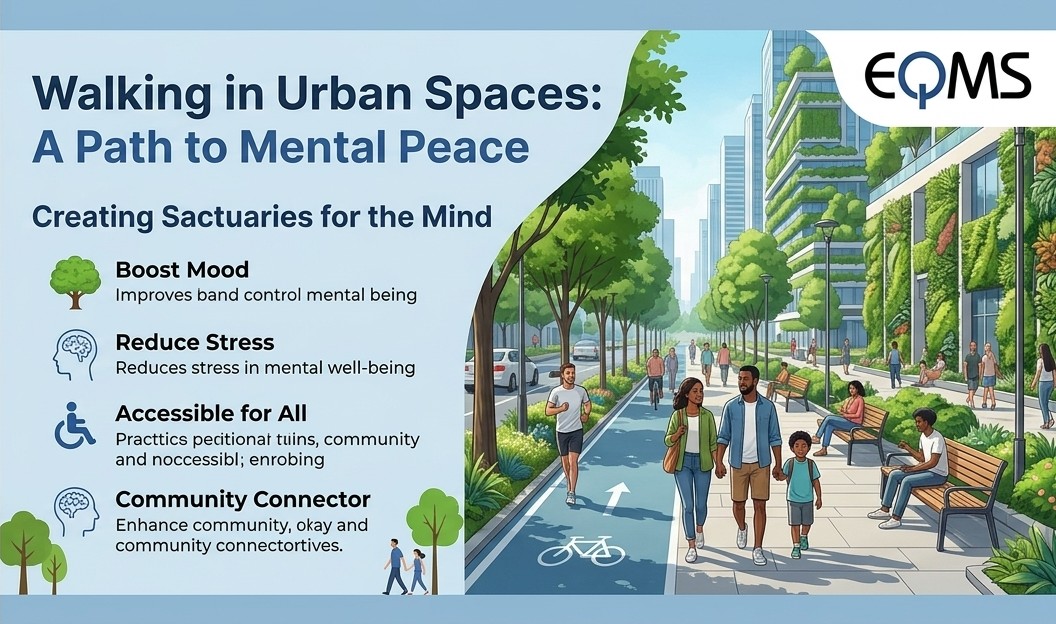
• Tree-lined
streets – Reduce noise, filter air, and create a calming atmosphere.
• Dedicated
pedestrian lanes – Safe from vehicles, allowing stress-free movement
• Accessibility
for all – Ensuring walking spaces are inclusive, welcoming everyone.
• Parks
and open spaces – Offering routes where walking feels like an escape into
nature.
• Benches
and rest areas – Giving people places to pause, reflect, and breathe.
The Importance of Urban Aesthetics in Walking
Spaces
When we talk about walkable cities, we often focus on how practical they
are. But it's just as important to consider how they look and feel. Beautiful
streetscapes with trees, public art, and good lighting do more than just look
nice—they make us feel better. These inviting spaces encourage us to walk more
often, which can reduce stress and help us feel more connected to our
community. Great urban planning understands this and works to make sure our
walking paths are both useful and enjoyable.
Walking as a Social and Emotional Connector
Urban walking paths are more than just places to stroll; they're where
communities come together. They're a place for neighbors to meet, strike up
conversations, and build a stronger community. For many, a simple evening walk
is a way to unwind from the day's stress and connect with others. In this way,
walking doesn't just bring people individual peace, it helps create a
collective sense of well-being.
Future Cities and Walking for Well-Being
How do we grow our cities without sacrificing our quality of life? The
answer is simple: by prioritizing people. We need to design urban spaces that
are beautiful and easy to walk through. This isn't just a design choice; it's
an investment in public health and happiness. Moving forward, walking shouldn't
be a secondary consideration—it should be a central part of how we build cities
for our mental well-being. Ultimately, the most successful cities will be those
that integrate beauty and function, fostering healthier and more connected
communities. Think of a city walk not just to get somewhere, but as a chance to
hit the reset button. When we design our cities with safer, green, and
beautiful places to walk, we're not just creating paths, we're building
sanctuaries for our minds. Ultimately, a good walk in the city can be a
powerful way to find a little peace amidst a busy world.
Share this page via
More from Asma Amin Rimi